(
(
How to
How to
)
)
Changing the date
Changing the date
Why would you want a watch without a date...thats crazy
Why would you want a watch without a date...thats crazy
by
Arena
3
min read
Understanding the Mechanism
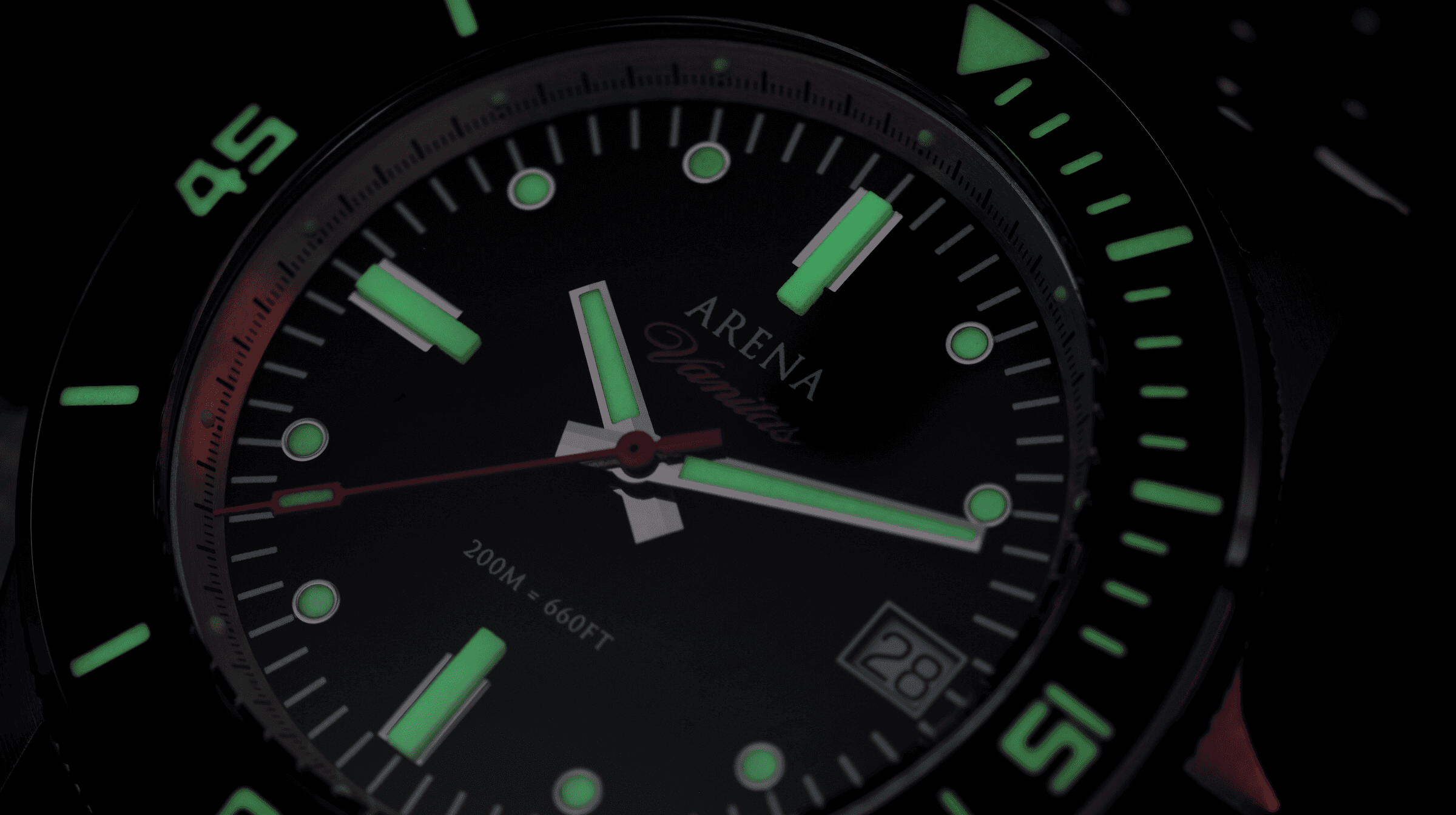
Inside the Vanitas, the Sellita SW300-1 movement manages the date mechanically, advancing once every 24 hours through a precise sequence of gears and springs. This system is reliable and elegant, but it must be treated with respect. Unlike digital watches that can be changed at any time, mechanical date mechanisms are sensitive to when adjustments are made. Understanding this window and why it matters is key to keeping your movement healthy for decades.
The Date-Change Window
Between approximately 8:00 PM and 4:00 AM, the watch’s date change gears are engaged. During this period, the mechanism is preparing to advance the date automatically. Forcing the crown to adjust the date manually during this time can damage the teeth of the date wheel or the switching lever one of the most common mechanical failures in automatic watches. To avoid this, always move the hands outside this range before setting the date. The safest method is to advance the time to around 6:00 AM, then set the date normally.
Step-by-Step Procedure
Unscrew the crown and pull it to the 3rd position (2nd to last, you’ll feel a light click).
Turn the crown counterclockwise to change the date. If the date isn't changing, you didn't get it into the 3rd position. (It can be tricky for a guy named Rob)
If unsure whether the time is AM or PM, advance the hands past midnight to confirm the date change, then set the correct time and date together.
After setting, push the crown back in and screw it down fully to position 1, so you maintain the watch’s seal and water resistance.
Why It Matters
Adjusting the date correctly preserves both the precision and the integrity of the movement. Every action you take with a mechanical watch interacts with hundreds of small, interdependent parts each one finely tuned to handle motion, not force. Setting the date becomes less about convenience and more about care. The Vanitas was built to last generations, but longevity depends on how it’s handled. A single act of patience waiting until the safe window can save years of service and protect the delicate system that keeps your time aligned.
Understanding the Mechanism
Inside the Vanitas, the Sellita SW300-1 movement manages the date mechanically, advancing once every 24 hours through a precise sequence of gears and springs. This system is reliable and elegant, but it must be treated with respect. Unlike digital watches that can be changed at any time, mechanical date mechanisms are sensitive to when adjustments are made. Understanding this window and why it matters is key to keeping your movement healthy for decades.
The Date-Change Window
Between approximately 8:00 PM and 4:00 AM, the watch’s date change gears are engaged. During this period, the mechanism is preparing to advance the date automatically. Forcing the crown to adjust the date manually during this time can damage the teeth of the date wheel or the switching lever one of the most common mechanical failures in automatic watches. To avoid this, always move the hands outside this range before setting the date. The safest method is to advance the time to around 6:00 AM, then set the date normally.
Step-by-Step Procedure
Unscrew the crown and pull it to the 3rd position (2nd to last, you’ll feel a light click).
Turn the crown counterclockwise to change the date. If the date isn't changing, you didn't get it into the 3rd position. (It can be tricky for a guy named Rob)
If unsure whether the time is AM or PM, advance the hands past midnight to confirm the date change, then set the correct time and date together.
After setting, push the crown back in and screw it down fully to position 1, so you maintain the watch’s seal and water resistance.
Why It Matters
Adjusting the date correctly preserves both the precision and the integrity of the movement. Every action you take with a mechanical watch interacts with hundreds of small, interdependent parts each one finely tuned to handle motion, not force. Setting the date becomes less about convenience and more about care. The Vanitas was built to last generations, but longevity depends on how it’s handled. A single act of patience waiting until the safe window can save years of service and protect the delicate system that keeps your time aligned.