(
(
Employ
Employ
)
)
Power reserve and winding
Power reserve and winding
Batteries not included
Batteries not included
by
Arena
3
min read
The Energy Behind Time
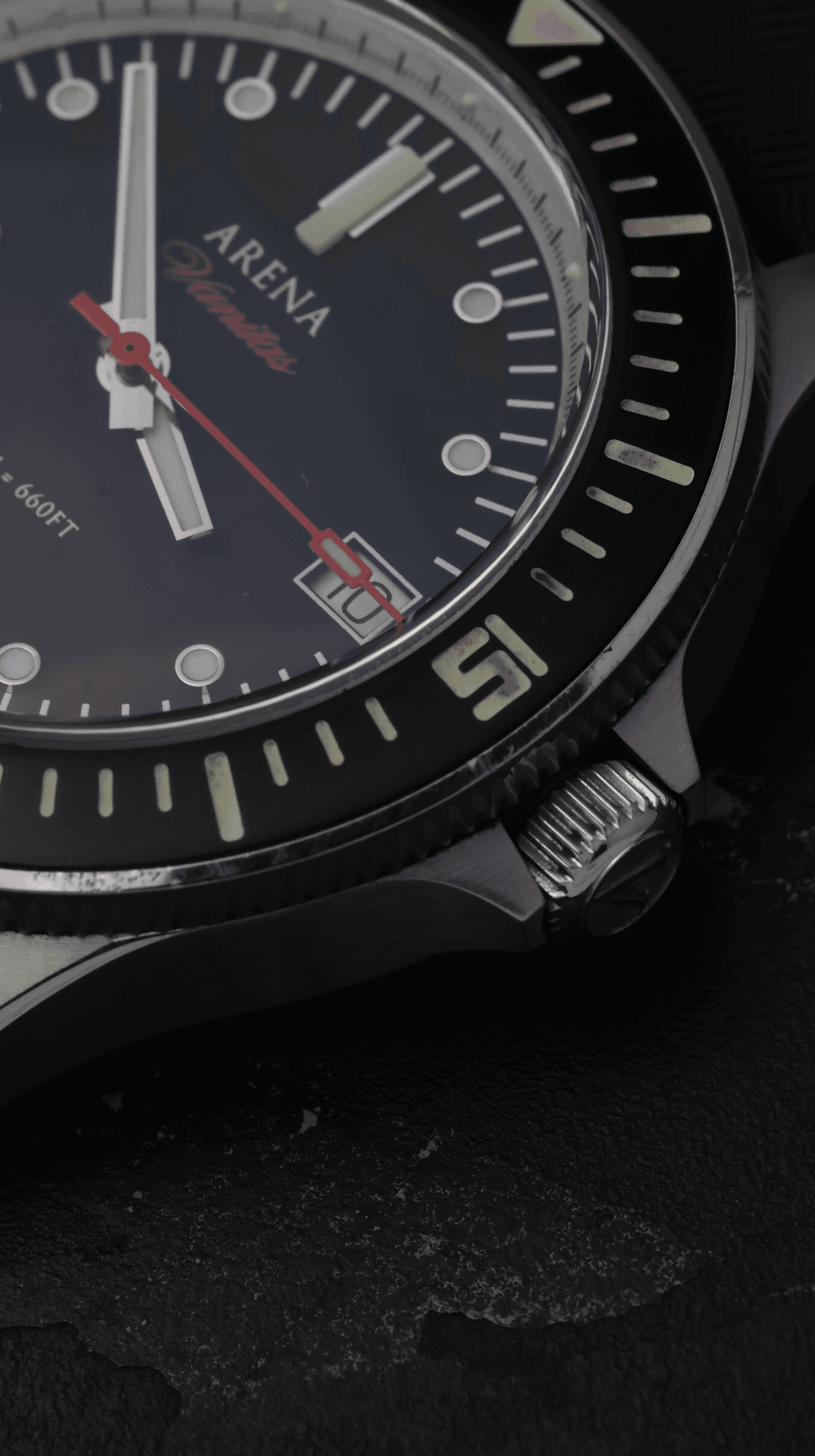
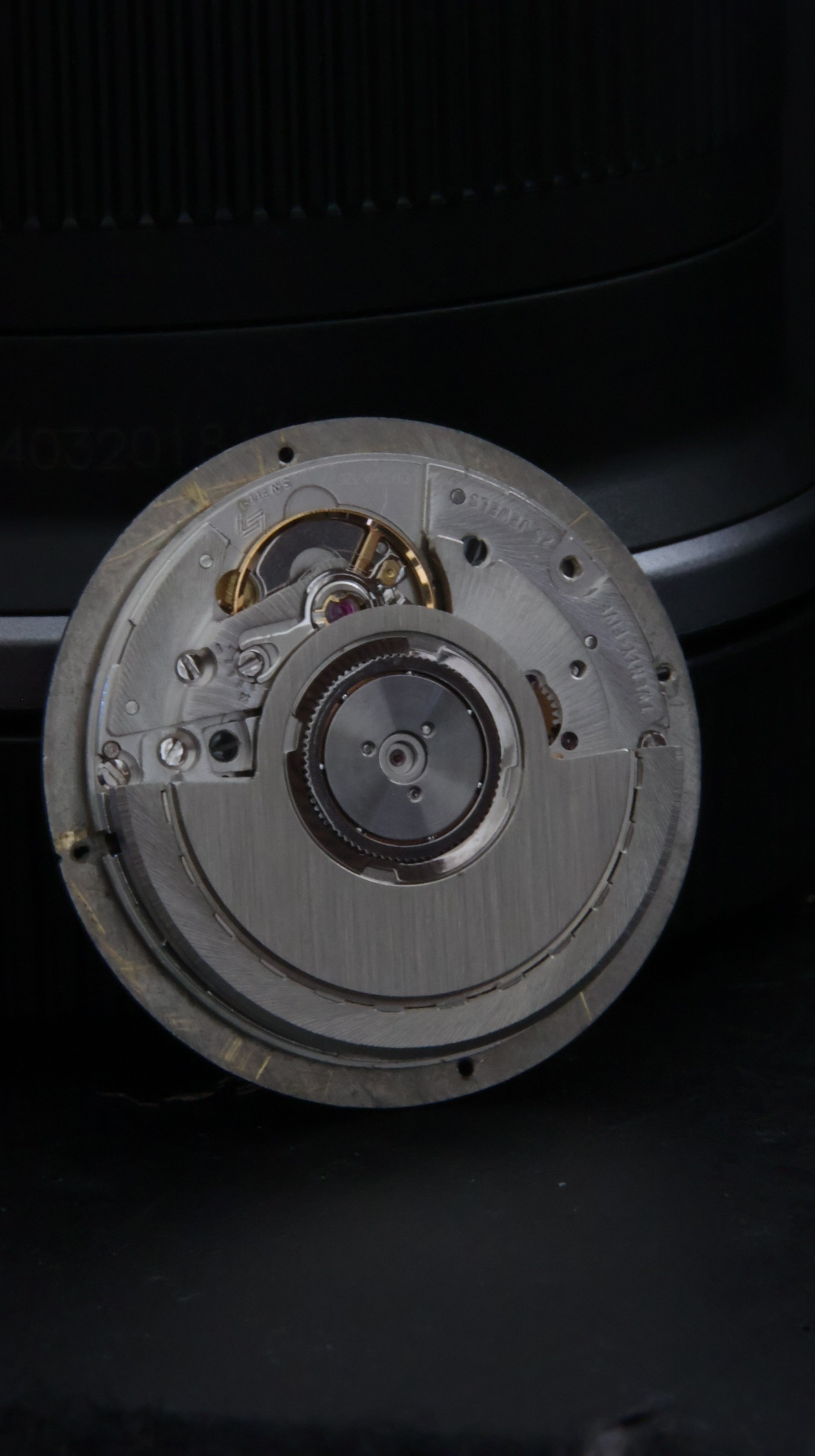
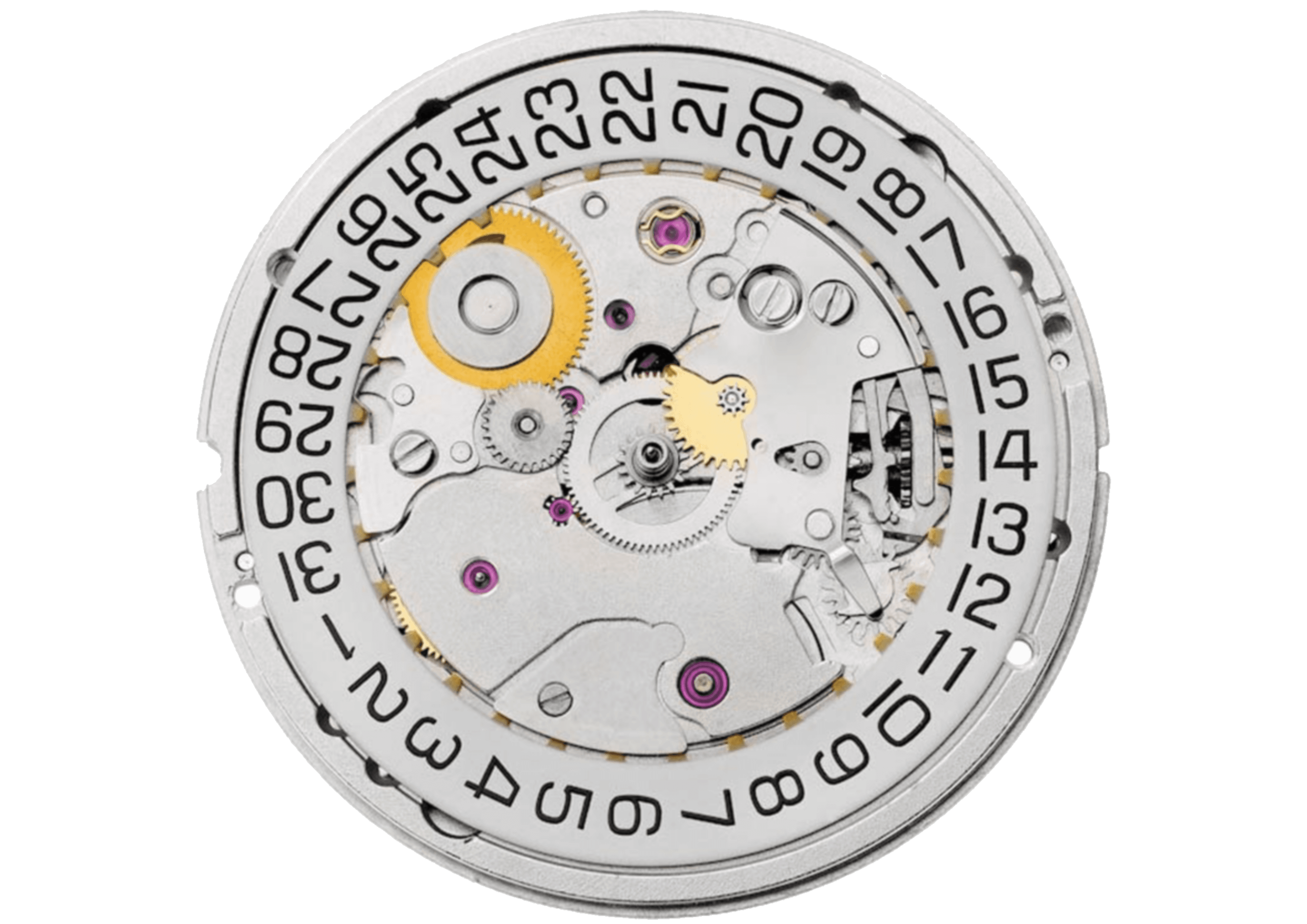
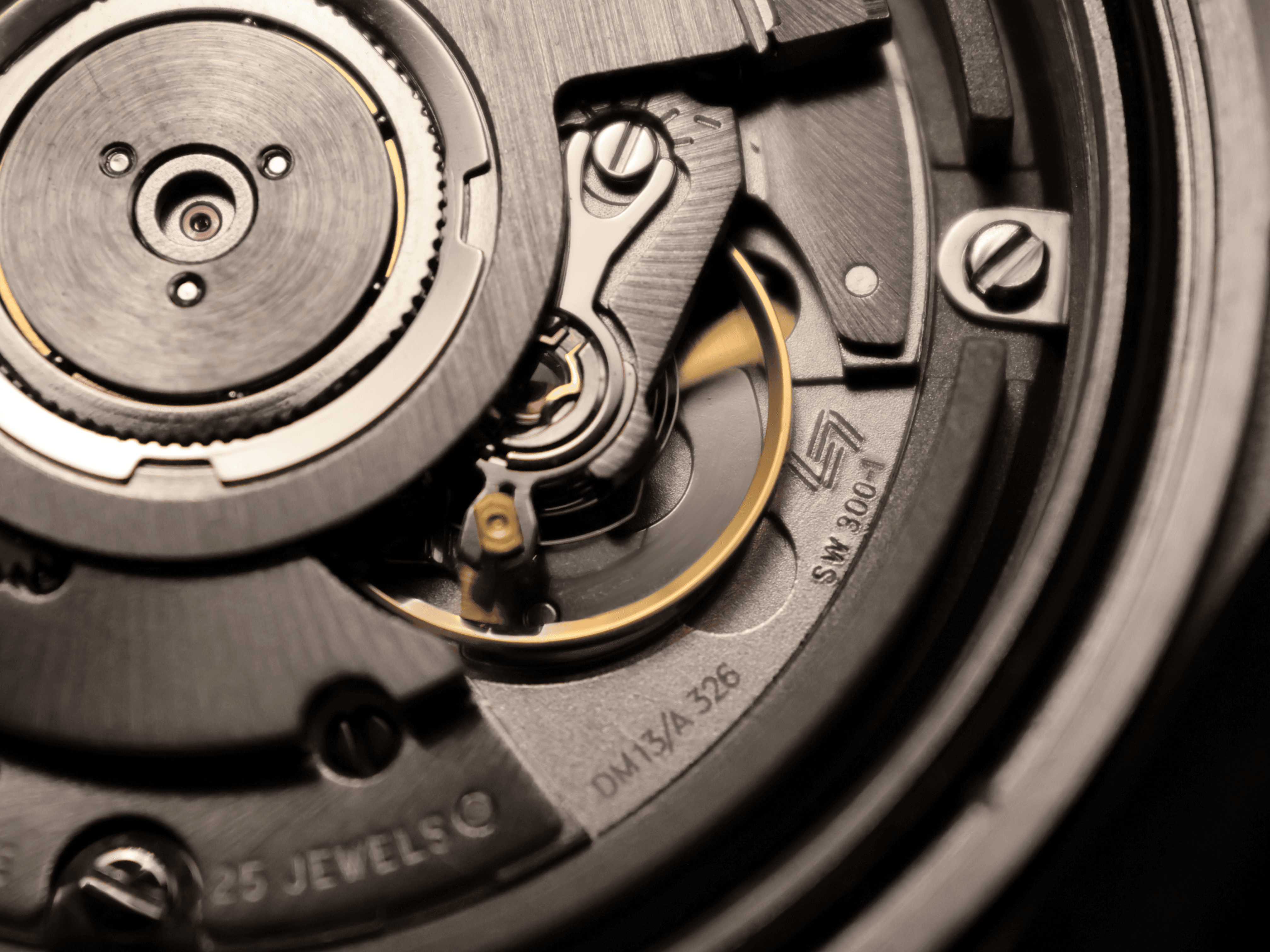
A mechanical watch doesn’t need batteries, screens, or charging cables, it runs on tension, precision, and movement. Inside the Vanitas’ Sellita SW300-1 movement lies a finely coiled mainspring wound around a barrel. As that spring slowly unwinds, it releases stored energy through a series of gears that drive the hands forward. This simple system, steel, torque, and restraint, is what gives the watch life. Every second you see on the dial is powered by the gradual release of that stored mechanical energy.
Understanding Power Reserve
The Vanitas offers a 56 hour power reserve, meaning that when fully wound, it will continue to run for roughly two days without being worn. Like lungs exhaling, the mainspring releases energy evenly until it reaches the end of its tension. When the power reserve runs out, the movement stops, not because something broke, but because it’s resting, waiting for new energy. Winding the watch restores that tension, bringing the balance wheel back to life. It’s one of the most satisfying interactions in all of horology, the moment the second hand begins to move again, powered entirely by your motion.
When to Wind
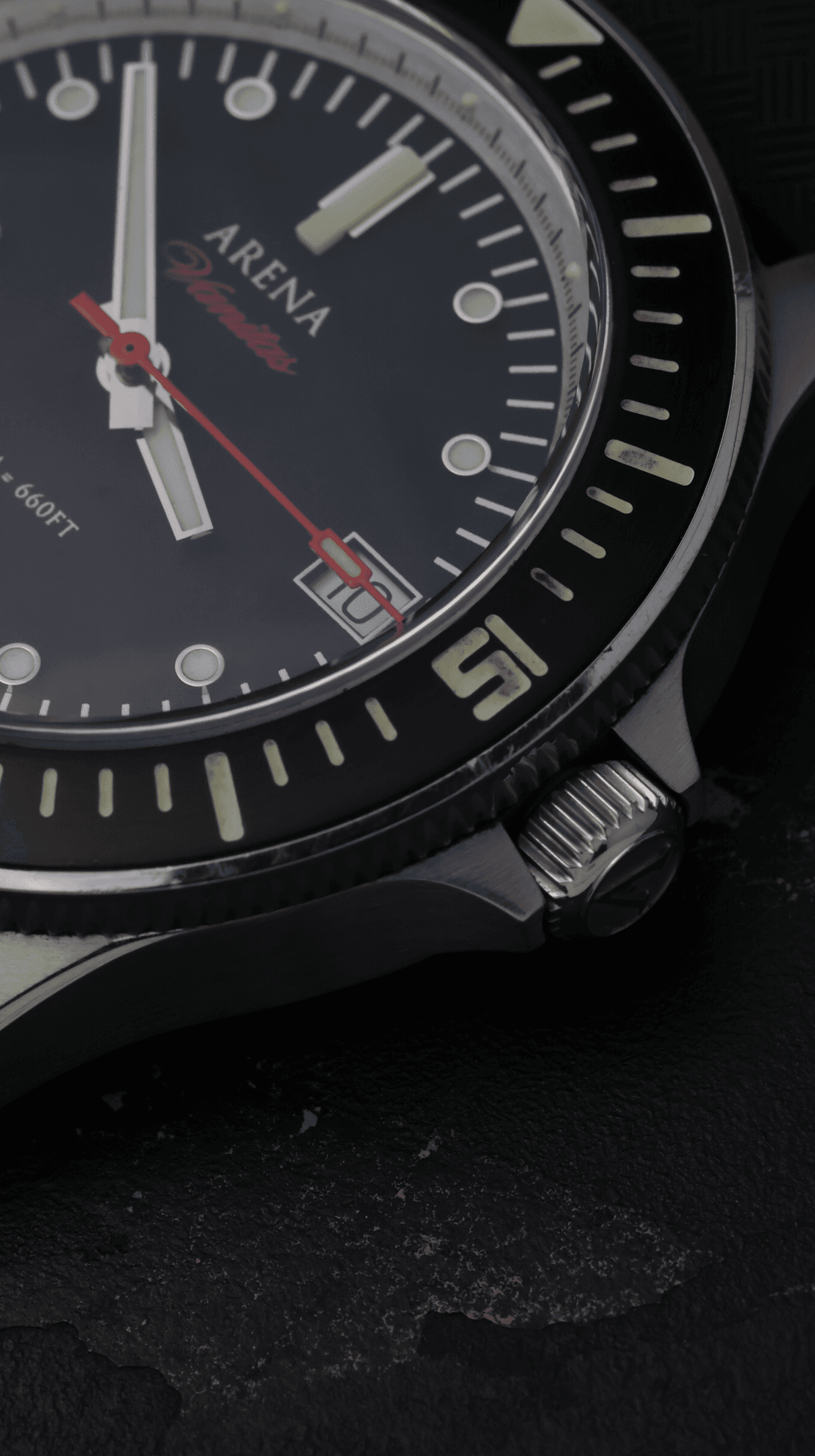
If the watch has been unworn for more than a day or two, or if you notice the time has stopped, it’s time to wind it. Unscrew the crown and turn it clockwise, about 30 to 40 full turns. You’ll feel a smooth, consistent resistance as the mainspring tightens. Stop when you feel slight tension, forcing it further won’t improve the reserve and could stress the spring. Once wound, screw the crown back in securely. If you wear the watch regularly, your natural wrist movement will keep the rotor inside spinning, automatically topping off the mainspring as you go about your day.
How Automatic Winding Works
The SW300-1 is an automatic mechanical movement, which means it’s self-winding. A weighted rotor swings with motion, converting your movement into stored energy. Every step, every motion of your wrist contributes to the winding cycle, keeping the watch running indefinitely as long as it’s worn. When stored for long periods, the watch simply pauses its life, ready to start again with a few turns of the crown.
The Arena Philosophy
Winding a watch is more than maintenance, it’s ritual. It connects you to the machine in a way digital devices never can. Each turn of the crown is a reminder that time isn’t infinite; it’s something you generate, something you give energy to. The Vanitas was built to embody that relationship: a tool that runs only because you do. In a world where everything depends on charging ports and updates, a mechanical watch remains one of the last truly self sustaining machines. It doesn’t ask for attention, just motion…and we all need motion.
The Energy Behind Time
A mechanical watch doesn’t need batteries, screens, or charging cables, it runs on tension, precision, and movement. Inside the Vanitas’ Sellita SW300-1 movement lies a finely coiled mainspring wound around a barrel. As that spring slowly unwinds, it releases stored energy through a series of gears that drive the hands forward. This simple system, steel, torque, and restraint, is what gives the watch life. Every second you see on the dial is powered by the gradual release of that stored mechanical energy.
Understanding Power Reserve
The Vanitas offers a 56 hour power reserve, meaning that when fully wound, it will continue to run for roughly two days without being worn. Like lungs exhaling, the mainspring releases energy evenly until it reaches the end of its tension. When the power reserve runs out, the movement stops, not because something broke, but because it’s resting, waiting for new energy. Winding the watch restores that tension, bringing the balance wheel back to life. It’s one of the most satisfying interactions in all of horology, the moment the second hand begins to move again, powered entirely by your motion.
When to Wind
If the watch has been unworn for more than a day or two, or if you notice the time has stopped, it’s time to wind it. Unscrew the crown and turn it clockwise, about 30 to 40 full turns. You’ll feel a smooth, consistent resistance as the mainspring tightens. Stop when you feel slight tension, forcing it further won’t improve the reserve and could stress the spring. Once wound, screw the crown back in securely. If you wear the watch regularly, your natural wrist movement will keep the rotor inside spinning, automatically topping off the mainspring as you go about your day.
How Automatic Winding Works
The SW300-1 is an automatic mechanical movement, which means it’s self-winding. A weighted rotor swings with motion, converting your movement into stored energy. Every step, every motion of your wrist contributes to the winding cycle, keeping the watch running indefinitely as long as it’s worn. When stored for long periods, the watch simply pauses its life, ready to start again with a few turns of the crown.
The Arena Philosophy
Winding a watch is more than maintenance, it’s ritual. It connects you to the machine in a way digital devices never can. Each turn of the crown is a reminder that time isn’t infinite; it’s something you generate, something you give energy to. The Vanitas was built to embody that relationship: a tool that runs only because you do. In a world where everything depends on charging ports and updates, a mechanical watch remains one of the last truly self sustaining machines. It doesn’t ask for attention, just motion…and we all need motion.